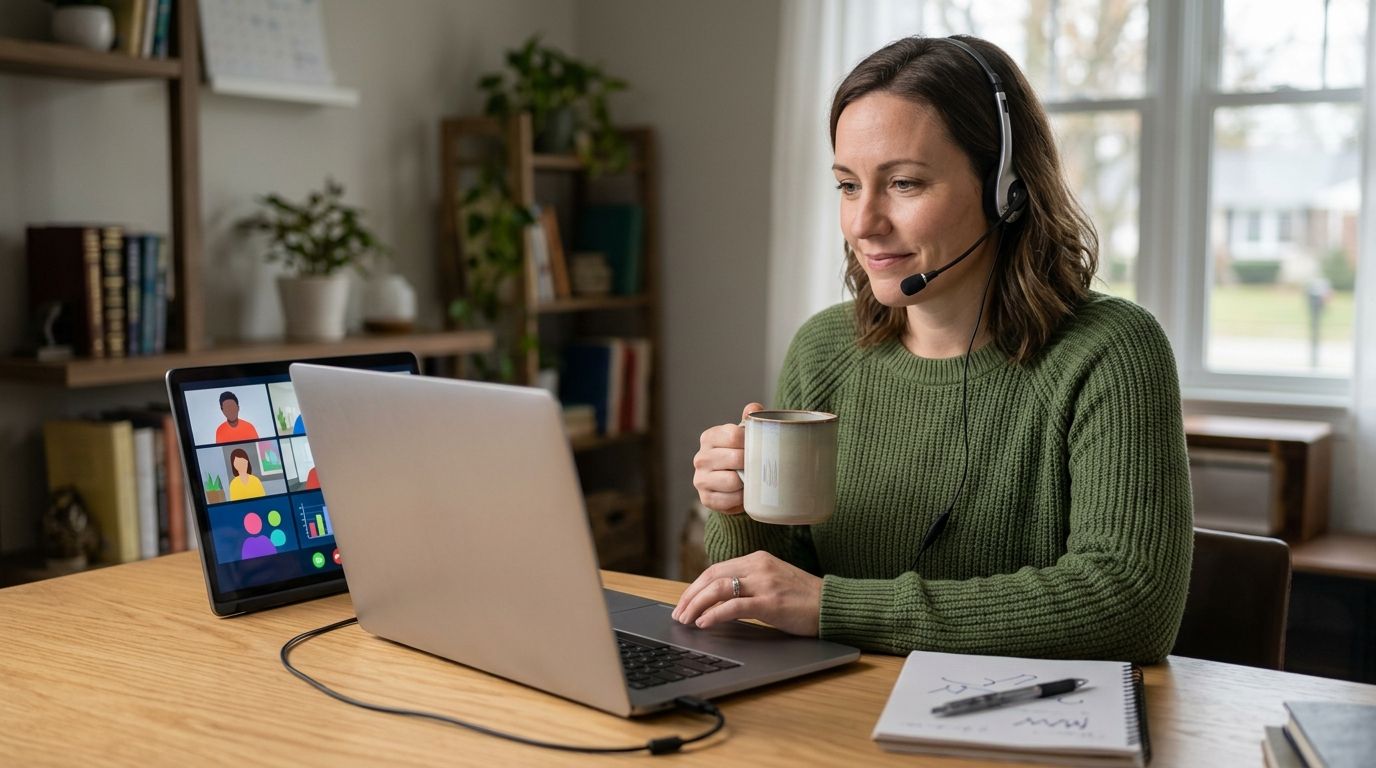
A child ADHD evaluation is an assessment of attention, activity, development, and everyday functioning that helps explain a child's difficulties and guide care. This parent preparation guide includes a home-and-school worksheet, teacher questions, and an appointment checklist you can copy or print; it is not a diagnostic test.
- Bring observations, not a predetermined diagnosis, to a child ADHD evaluation.
- Record the task, setting, difficulty, support tried, and what happened next.
- Ask teachers about both strengths and difficulties; report differences between home and school.
- SOS Wellness provides child and adolescent psychiatric care for Ohio families seeking assessment.
For Ohio families arranging care in 2026, SOS Wellness offers child and adolescent psychiatry. The preparation below helps you organize questions without promising a particular diagnosis, treatment, or appointment outcome.
Why preparation matters
A broad statement such as “homework is impossible” leaves several questions unanswered. Is the instruction unclear? Is reading itself difficult? Does your child start successfully but lose track halfway through?
Specific observations help a clinician distinguish those situations. According to CDC's diagnosis guidance, available in 2026, there is no single test for ADHD; information from parents, teachers, and other caregivers helps describe behavior across settings.
Your job is to describe your child's experience honestly. The clinician's job is to interpret it. You do not need to gather enough evidence to prove ADHD before requesting help.
A parent preparation plan for a child ADHD evaluation
Use these steps as an organizing tool rather than an admission requirement. Missing records or an unanswered teacher question should not stop you from asking for an appointment.
1. Name the difficulty and its effect
Start with the reason you are seeking help now. Describe what your child cannot consistently manage and how that affects learning, relationships, or family routines.
Illustrative example, not a patient story: “My child starts homework but repeatedly loses their place and needs me to repeat the next instruction” is more informative than “My child has no focus.” Neither statement establishes a diagnosis.
Also describe an activity that goes well. A child who struggles with independent work but follows a hands-on task successfully offers useful information about demands and supports.
- Write the main concern in plain language.
- Identify where it happens.
- Describe the effect on your child, not only on adults.
- Include a strength or successful routine.
2. Complete a home-and-school observation worksheet
Copy this worksheet into a document or print this section. Complete it for real situations you have observed; it is an informal preparation aid, not a validated rating scale or a scoring system.
| Observation field | Your notes |
|---|---|
| Date and setting | ______________________________ |
| Task or instruction | ______________________________ |
| What your child did, in observable terms | ______________________________ |
| What became difficult or remained unfinished | ______________________________ |
| Sleep, worry, illness, or relevant changes | ______________________________ |
| Support or reminder tried | ______________________________ |
| What happened after that support | ______________________________ |
| Your child's explanation, if shared | ______________________________ |
| A strength or something that went well | ______________________________ |
Illustrative entry: During a homework task, a child repeatedly stops before completing the instruction. An adult writes the next action on paper, and the child resumes. Record that sequence without concluding that it proves ADHD or rules out a learning concern.
A useful entry separates observation from interpretation. “Left the table before finishing the worksheet” is observable; “did not care about school” assumes a motive you cannot establish.
- Record ordinary days, not only difficult moments.
- Include the help your child already receives.
- Note whether the task itself was understood.
- Leave uncertain details marked as unknown.
3. Ask the teacher for concrete information
Teacher observations help describe the classroom, where demands differ from home. Ask about situations and support, rather than asking the teacher to diagnose your child.
You can adapt this message: “We are discussing attention and learning concerns with a clinician. Could you share examples of tasks that are difficult, tasks that go well, and strategies that help?” Ask the practice whether it uses particular teacher forms before creating extra paperwork.
| Question for the teacher | What it helps clarify |
|---|---|
| Which tasks are hardest: listening, starting, organizing, or finishing? | The point where a task breaks down |
| Does the difficulty appear across subjects or mainly in one? | Whether particular academic demands matter |
| What happens during independent work compared with supported work? | How structure changes functioning |
| Are instructions understood before the task starts? | Whether confusion contributes |
| What strengths or interests stand out? | A fuller picture of your child |
| Which classroom strategies help, and which do not? | Supports already tried |
If home and school reports differ, bring both accounts. Do not coach anyone to make them agree. Different demands, levels of support, or environments are questions for the clinician to explore.
- Request examples, not labels such as lazy or difficult.
- Ask about quiet inattention as well as disruption.
- Share relevant school information through an agreed channel.
- Avoid delaying care while waiting for a perfect report.
4. Gather records without building an overwhelming file
Bring relevant information that already exists. A brief summary and selected records are more usable than an unorganized collection of every assignment your child has completed.
Use this checklist for appointments arranged in 2026. Confirm the practice's own instructions because requirements differ, and this guide does not describe a fixed SOS Wellness intake process.
- Current medications, supplements, and known allergies.
- Relevant medical, developmental, and mental health history.
- Teacher observations and selected school reports.
- Existing learning assessments or school support plans.
- Notes about sleep, routines, and recent changes.
- Your child's questions and your main concerns.
If your child already has an Individualized Education Program or a 504 plan, bring the existing document. Those school plans are relevant background; neither their presence nor their absence settles the medical diagnosis.
5. Include your child's account
Tell your child that the appointment is about understanding what is hard and finding support. Avoid describing it as a meeting to fix bad behavior or prove that something is wrong with them.
Ask open questions: “Which part of school feels hardest?” and “What helps when you lose track?” A child's answer can reveal frustration, confusion, or worries that adults have not noticed.
For teenagers, ask what they want help with and what they hope to discuss privately. The clinician can explain confidentiality and its safety limits rather than parents promising privacy rules on the clinician's behalf.
- Invite your child to describe difficulties in their own words.
- Include interests and situations where they feel capable.
- Do not rehearse answers to symptom questions.
- Ask the clinician how the child will participate.
6. Choose practical questions for the end of the visit
Leave with an understanding of the next step, even when the evaluation is not finished. More information or another assessment can be an appropriate outcome; it is not automatically a dismissal.
Ask which observations support the clinician's explanation and which remain unclear. If treatment is proposed, connect it to a difficulty you can observe in everyday life.
- What explains the difficulties, and what remains uncertain?
- Is another evaluation or medical check needed?
- What support can we start at home or school?
- What information should we bring to follow-up?
- Who should we contact with treatment concerns?
ADHD, anxiety, sleep, and learning concerns: what should you report?
These concerns can overlap or occur together. This comparison helps you decide what information to share, not what diagnosis to assign.
| Concern to discuss | Useful observations | What the observation cannot establish |
|---|---|---|
| Attention or impulse-control difficulty | Task completion, organization, waiting, and behavior across settings | That ADHD is the only explanation |
| Anxiety | Worries, avoidance, situations that trigger distress | That anxiety excludes ADHD |
| Sleep difficulty | Sleep schedule, disrupted sleep, daytime tiredness | That improving sleep will resolve every concern |
| Learning difficulty | Problems with particular reading, writing, or other academic tasks | That task avoidance reflects lack of effort |
CDC identifies sleep disorders, anxiety, depression, and certain learning disabilities as conditions with symptoms similar to ADHD. Its guidance also describes hearing and vision checks as part of considering other explanations. Your clinician determines which checks fit your child's history.
Do not use this table to rule conditions in or out at home. Report what you observe, including sudden changes or relevant health concerns.
Treatment questions to ask after the evaluation
Preparation does not commit you to medication. If ADHD is diagnosed, ask how the plan fits your child's age, functioning, medical history, and family circumstances.
CDC's treatment guidance, consulted for this 2026 guide, summarizes age-based recommendations. For children younger than 6 years, behavior therapy is an important first step before medication. For children ages 6 years and older, recommendations include medication with behavior therapy and school support.
| Support | Best suited to | Useful question | Limitation |
|---|---|---|---|
| Parent behavior-management training | Caregivers learning consistent strategies | What skills will we practice at home? | Requires practice; does not replace assessment |
| Classroom support | Difficulties affecting school participation | How will we coordinate with the school? | Does not replace clinical care |
| Medication management | Children for whom a prescriber judges it appropriate | What benefit and side effects will we monitor? | Response varies and follow-up is needed |
Ask about appetite, sleep, and other relevant effects if medication is recommended. Do not start, stop, or change a prescription without the prescriber's guidance.
Common preparation mistakes
The most useful preparation is accurate, not elaborate. Avoid these habits when getting ready for a child ADHD evaluation in 2026:
- Trying to prove ADHD: Bring concerns and observations, not a rehearsed conclusion.
- Reporting only disruptive behavior: Quiet confusion and unfinished work matter too.
- Leaving out successful routines: Support that helps is part of the assessment picture.
- Assuming school and home must match: Share differences for the clinician to interpret.
- Waiting until every record is available: Ask what is essential before postponing a visit.
Arranging care in Ohio
SOS Wellness provides psychiatry, therapy, and medication management for children and adolescents. SOS Wellness is an outpatient option for Ohio families seeking assessment and personalized support, not an emergency service.
Use the contact page to ask which appointment fits your child's age and concerns. Confirm the visit format, insurance participation, referral requirements, and requested paperwork directly; this article does not guarantee coverage or appointment availability.
FAQ
What should I bring to my child's ADHD evaluation?
Bring concrete examples, relevant school information, current medications, and medical or developmental history. Ask the practice which forms it wants, and explain if records are unavailable.
Can I print the observation worksheet?
Yes, you can print this section or copy the table into a document. It is an informal note-taking aid, not a diagnostic test or validated rating scale.
What if the teacher sees fewer difficulties than I do?
Bring both reports rather than trying to make them agree. Different settings and support levels give the clinician useful questions to explore.
Does a quiet child need an ADHD evaluation?
A quiet child can need an evaluation for persistent attention or learning concerns. Visible hyperactivity is not required for predominantly inattentive ADHD, sometimes called ADD.
Should I complete an online quiz before the appointment?
An online quiz is not required to prove ADHD and does not establish a diagnosis. Ask the practice whether it uses particular clinical forms.
Does an ADHD evaluation commit my child to medication?
No, an evaluation does not commit your child to medication. Decisions depend on the findings, age, history, and discussion with the clinician.
How should I explain the appointment to my child?
Explain that the appointment is about understanding what feels difficult and finding support. Avoid presenting it as punishment or rehearsing answers for the clinician.
One last thing
Bring an example of what helped, not only what went wrong. A written instruction, a calmer setting, or support with a difficult task gives the clinician another useful observation. SOS Wellness can discuss those observations as part of child and adolescent care without assuming the diagnosis beforehand.
This 2026 guide is educational and does not replace individualized assessment. For immediate danger, call 911. For suicide or mental health crisis support, call or text 988; routine appointment forms are not emergency services.